Real Hair vs Synthetic Hair Extensions: What Is the Difference?
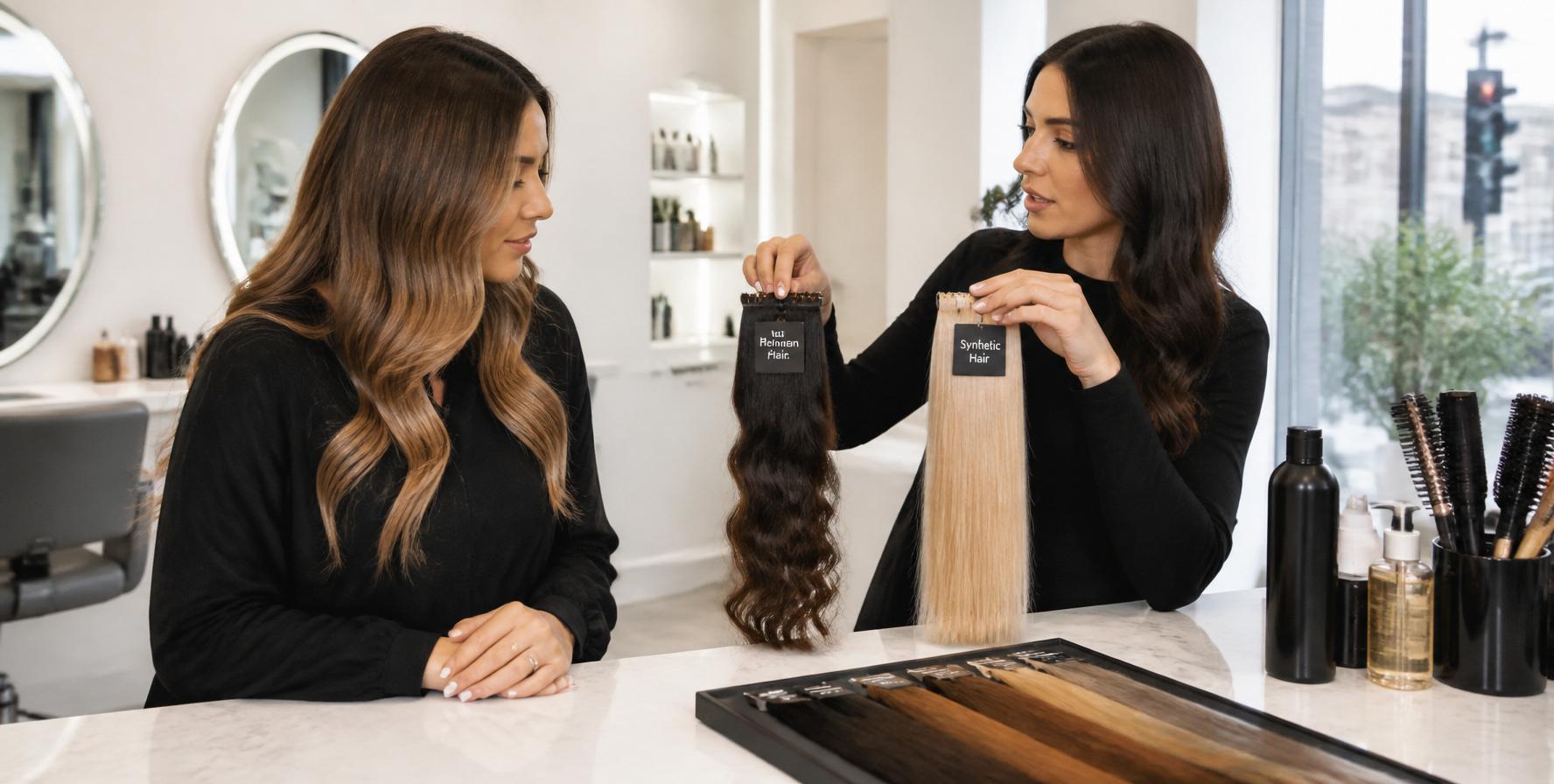
When you start looking into extensions, one of the first choices you will face is real human hair versus synthetic hair extensions. They can look similar in a photo, but they behave very differently in real life, and the right choice depends on your budget, how long you want them to last, and how you plan to style them. Understanding synthetic hair extensions and how they compare to real hair helps you avoid disappointment. In this guide, a specialist at Hair Nova Salon in Finchley breaks down the difference so you can choose with confidence.
What Are Synthetic Hair Extensions?
Synthetic hair extensions are made from man-made fibres, usually a form of fine plastic, designed to mimic the look of real hair. They are often pre-styled, so a curl or straight finish is essentially locked in, and they are considerably cheaper than human hair. Because the fibres are manufactured, synthetic hair extensions can have a slightly unnatural shine, tangle more easily, and, crucially, cannot usually withstand heat styling, as high temperatures can melt or damage the fibre. They tend to suit short-term or occasional wear rather than everyday use.
What Are Real Human Hair Extensions?
Real extensions are made from genuine human hair, which is why they look and move so naturally and blend seamlessly with your own hair. Because they are real hair, you can wash, heat-style, curl, straighten and even have them toned or coloured by a professional, just like your natural hair. They last far longer than synthetic, can often be reused at maintenance appointments, and give that undetectable, luxurious finish. The trade-off is cost, as quality human hair is a bigger investment, but it pays off in realism and longevity, and for most people that natural, undetectable finish is exactly what they are paying for, which is why human hair is the standard choice for anyone wearing extensions regularly rather than just for a single one-off occasion or a costume.
Synthetic Hair Extensions vs Real Hair: The Key Differences
Here is how the two compare at a glance:
- Appearance: human hair looks completely natural; synthetic can look shinier and less realistic.
- Heat styling: human hair can be curled and straightened; most synthetic hair cannot take heat.
- Lifespan: human hair lasts many months; synthetic typically lasts weeks to a few months.
- Maintenance: human hair behaves like your own; synthetic tangles more and cannot be restyled freely.
- Cost: synthetic is cheaper upfront; human hair costs more but lasts far longer.
Can You Heat Style Synthetic Hair Extensions?
As a rule, no, and this is the biggest practical difference. Standard synthetic hair extensions will frizz, melt or be permanently damaged by straighteners, curlers or hot tools, which is why they come pre-styled. There are some newer heat-friendly synthetic fibres that tolerate low heat, but they are the exception and still far less versatile than human hair. If you love changing your style, curling one day and straightening the next, real human hair is the only option that keeps up with you.
How Long Do They Last?
Lifespan is where the value gap really shows. Synthetic extensions generally last from a few weeks to a couple of months before they look worn, tangled or dull, and they cannot usually be revived. Quality human hair extensions, cared for properly, can last from six months to a year or more, and are frequently reused when you have them refitted. So while synthetic looks cheaper on the day, human hair often works out better value over time when you factor in how much longer it lasts.
Do Synthetic Hair Extensions Look Fake?
They can, and this is often the giveaway. Because synthetic hair extensions are made from uniform man-made fibres, they tend to have an unnaturally consistent, sometimes plasticky sheen that catches the light differently to real hair. Real human hair has natural variation in texture and shine that blends seamlessly, whereas synthetic can look a little too perfect or glossy up close. Higher-quality synthetic has improved over the years, but for a genuinely undetectable, natural finish, especially in daylight or photos, real human hair remains far more convincing.
Are Synthetic Hair Extensions Bad for Your Hair?
Synthetic hair extensions are not inherently damaging in themselves, but there are things to watch. Because they tangle more easily and cannot be brushed or styled as freely, the extra friction and tugging can stress your natural hair if you are not gentle. Cheap synthetic clip-ins worn often, or heavy synthetic wefts, can also pull on the hair. As always, the method and the care matter most; used occasionally and handled gently, synthetic clip-ins are fine, but for everyday wear, well-fitted human hair is kinder to your natural hair.
Can Synthetic and Human Hair Be Mixed?
It is generally best not to mix them, especially when heat is involved. If you heat-style your own hair or human hair extensions while wearing synthetic pieces, the synthetic fibres can melt or frizz because they cannot take the temperature. Mixing textures and shine levels also tends to look obvious. If you want a seamless, style-anything result, it is far better to stick with one type throughout, and for that reason we fit only quality human hair, so everything blends and behaves consistently.
Which Should You Choose?
It comes down to how you will use them. Synthetic clip-ins can be a fun, affordable choice for a one-off costume, a festival, or trying a bold colour you would never commit to. But for everyday wear, a natural everyday look, and the freedom to style your hair however you like, real human hair is the clear winner. If you want extensions that blend invisibly and last, human hair is worth the investment; if you just want a short-term novelty, synthetic can do the job.
How to Care for Each Type
Care differs between the two, which is worth knowing before you choose. Synthetic hair extensions need gentle, cool handling: no heat, a special synthetic-safe detangling spray, and careful storage, as they cannot be revived once they frizz or tangle badly. Real human hair extensions are cared for much like your own hair, with sulphate-free products, regular gentle brushing, heat protectant when styling, and professional maintenance appointments. Human hair rewards good care with a long life and can be reused, whereas synthetic is essentially disposable once it wears out, which is another reason it suits short-term wear.
Why We Use Real Human Hair at Hair Nova Finchley
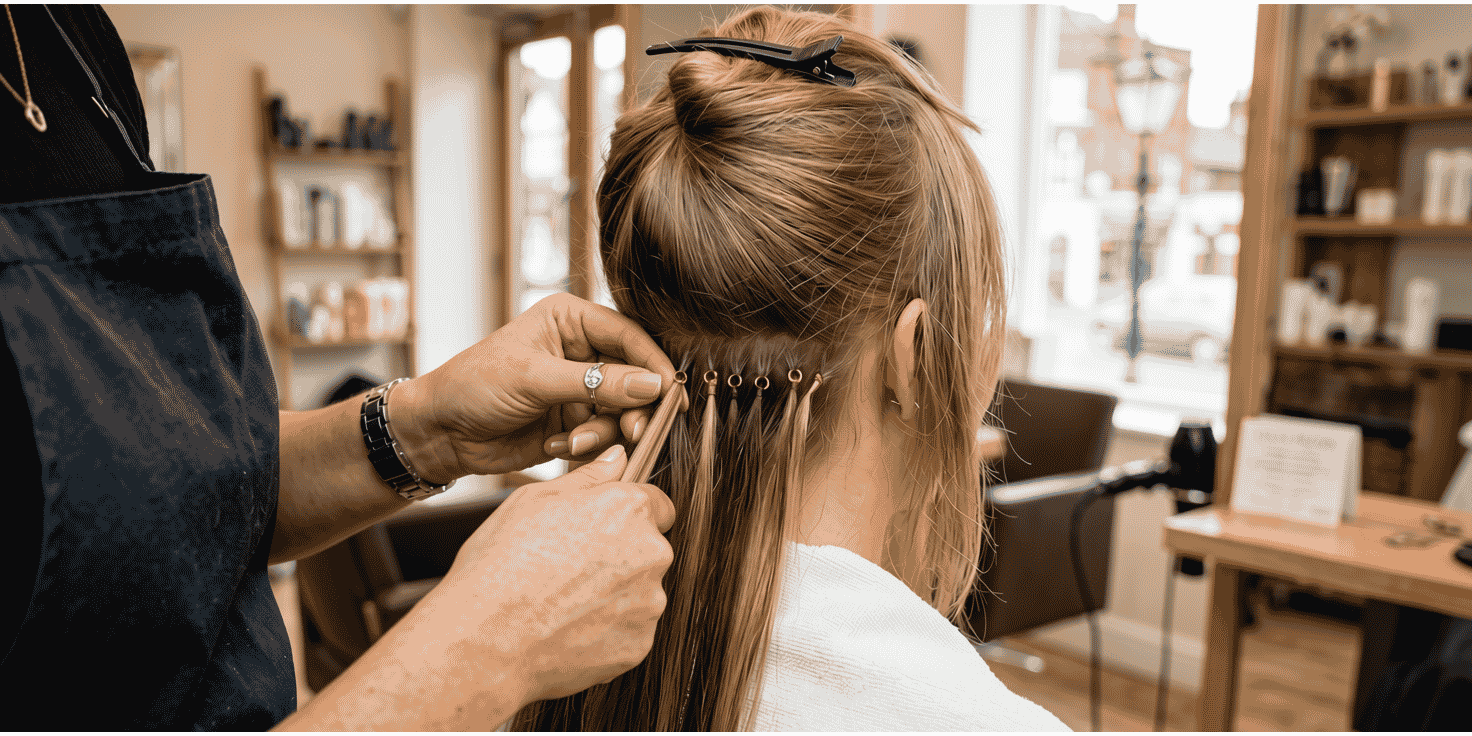
At our salon, we fit premium human hair because it is the only way to guarantee a natural, undetectable, long-lasting result that you can style freely. Whether you choose our tape-in extensions or our nano ring extensions, the hair is real, reusable and colour-matched to blend perfectly with your own.
Book Your Extension Consultation in Finchley
Not sure which is right for you? Book online on Fresha or call 020 8129 4894, and our specialists will talk you through your options. We are at 375 Regents Park Road, Finchley, London N3 1DE, one minute from Finchley Central Station.
FAQ
Real extensions are genuine human hair that looks natural and can be heat-styled and coloured. Synthetic extensions are man-made fibres that are cheaper, often pre-styled, and cannot usually take heat.
Usually no. Standard synthetic fibres frizz or melt with heat, which is why they come pre-styled. Only a few special heat-friendly synthetics tolerate low heat; human hair styles freely.
Real human hair lasts far longer, often six months to a year or more with care, and can be reused. Synthetic typically lasts only weeks to a couple of months.
For a one-off costume, festival or bold colour, they can be a fun, cheap option. For everyday, natural, style-anything wear, real human hair is the better investment.