Why Does My Hair Fall Out More in Autumn?
Losing more hair than usual this October is not your imagination – and it is not a sign that something is seriously wrong. Hair loss in autumn is one of the most commonly noticed but least understood seasonal changes your body goes through every year.
Research suggests that humans shed more hair in autumn than at any other time of year. The process is temporary, entirely natural, and follows a predictable biological pattern – but that does not make it any less alarming when you see it happening in the shower or on your brush.
This guide explains exactly why hair loss in autumn happens, how long it lasts, what you can do to support your hair through it, and when it might be worth speaking to a professional.
The Short Answer: Why Hair Falls Out More in Autumn
Hair falls out more in autumn because of a natural biological process called telogen effluvium. During summer, more hairs than usual enter a resting phase in response to changes in daylight hours and temperature. Two to three months later – typically September to November – those resting hairs shed together, causing a noticeable increase in daily hair fall.
This is not hair loss in the medical sense. It is shedding – a normal part of the hair growth cycle that happens to peak in autumn for most people. The hairs that fall out are replaced by new growth underneath, which is already in progress by the time you notice the shedding.
What Is Telogen Effluvium and Why Does Autumn Trigger It?

The hair growth cycle has three phases. The anagen phase is active growth – this is when the hair is producing new cells and getting longer. The catagen phase is a short transition. The telogen phase is the resting phase, where the follicle is dormant and the hair is no longer growing before it eventually sheds.
In summer, the longer daylight hours and warmer temperatures cause a higher proportion of hairs to stay in the anagen phase – your hair holds on. When the days shorten and temperatures drop in late summer and early autumn, those hairs that were held over enter the telogen phase together. Around two to three months later, they shed simultaneously. That is why October and November are peak hair shedding months for most people in the UK.
A study published in a dermatology journal found that the proportion of scalp hairs in the telogen phase was highest in July, which explains why autumn shedding peaks around September to November when those July resting hairs reach the end of their telogen phase and fall out.
How Much Hair Loss in Autumn Is Normal?
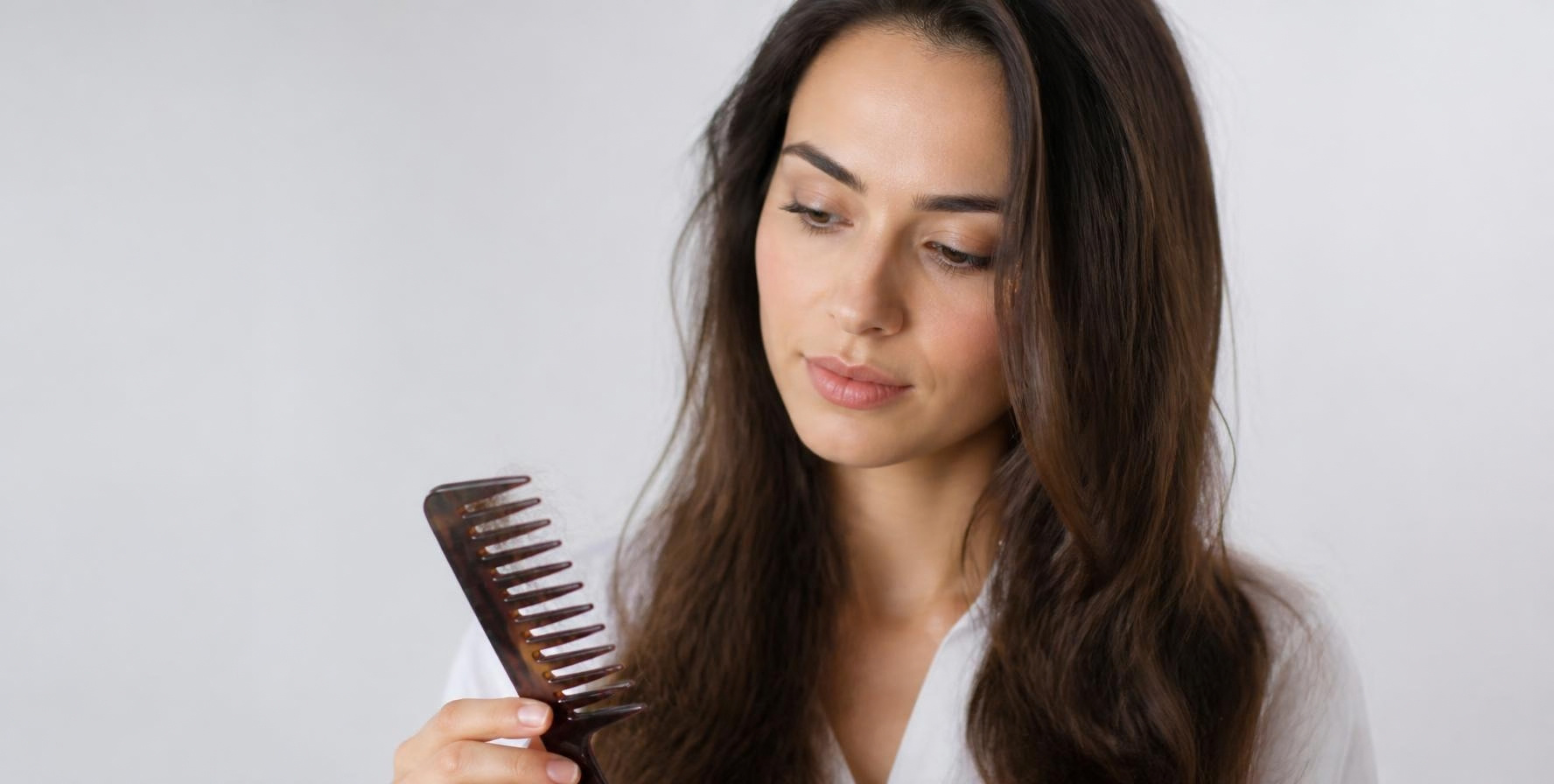
It is considered normal to lose between 50 and 100 hairs per day on average. During peak autumn shedding, some people lose up to 150 hairs per day – and this can feel dramatic, particularly on wash days when several days of shedding comes out at once.
The key question is not the number of hairs you are losing, but whether your hair looks noticeably thinner over time. Seasonal shedding replaces itself – you will shed more hairs, but new growth fills the gap within a few months. If your hair is consistently looking thinner month after month with no sign of regrowth, that is a different situation and worth investigating.
Run a gentle finger test if you are unsure. Take a small section of clean, dry hair and run your fingers from root to tip with light pressure. Losing two to five hairs in a single pass is normal. Losing fifteen or more consistently is worth a conversation with a trichologist or your GP.
Does Hair Loss in Autumn Grow Back?
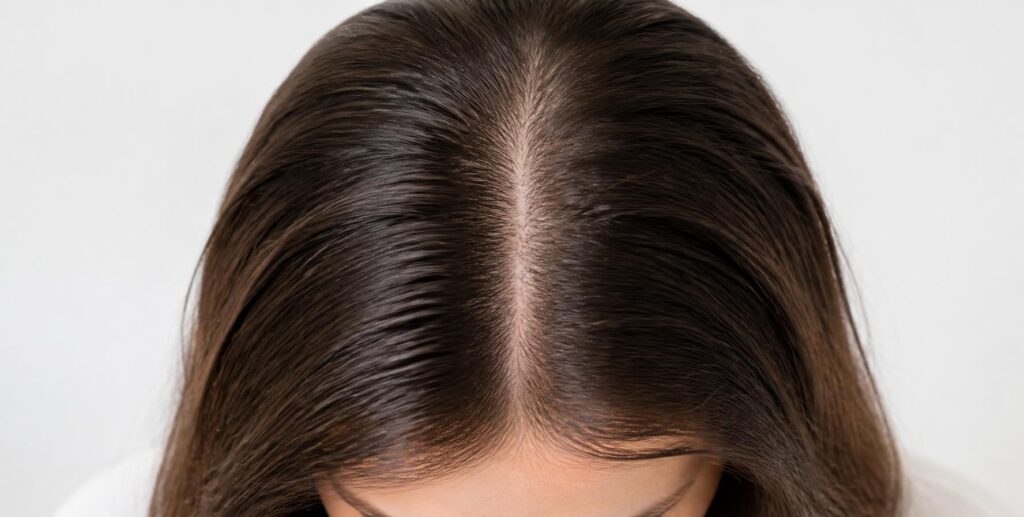
Yes – seasonal hair loss grows back. This is the most important thing to understand about autumn shedding. The hairs that fall out during this period are at the natural end of their growth cycle. The follicles that released them are already producing new hairs to replace them.
Most people notice their hair returning to its normal thickness by January or February. The new growth comes in at the root level first, so you may notice shorter, finer hairs at the scalp before the full density returns. This is entirely normal and a sign that the regrowth cycle is working correctly.
If your hair has not recovered by spring, or if the shedding does not slow down after six to eight weeks, there may be an underlying factor involved – such as iron deficiency, thyroid changes, or prolonged stress. You can read more about extensions for thinning hair and what to consider if your hair needs extra support during this period.
How to Support Your Hair Through Autumn Hair Loss
You cannot stop seasonal shedding, but you can support the health of the follicles and the condition of the hair that remains. Here is what actually makes a difference.
Nutrition: Iron, zinc, biotin and vitamin D are the four nutrients most directly linked to healthy hair growth. Autumn is when vitamin D levels drop as sunlight decreases, and low vitamin D has been linked to increased hair shedding. A balanced diet with adequate protein is the foundation – hair is made of keratin, which is a protein, and inadequate protein intake directly affects hair quality and growth rate.
Scalp health: A healthy scalp produces healthy hair. Keep your scalp clean and avoid build-up from heavy products. A gentle clarifying wash once a month removes residue that can clog follicles and slow new growth.
Reduce mechanical stress: Autumn shedding means more hairs are loosely held in the follicle and ready to fall. Tight hairstyles, rough towel drying, and aggressive brushing accelerate shedding during this period. Detangle gently with a wide-tooth comb on damp hair rather than a brush on dry hair.
Heat protection: The central heating that comes on in autumn dries out both the scalp and the hair shaft. Use a heat protectant when styling and consider a weekly conditioning treatment. If your hair is naturally on the finer side, our guide on hair extensions for fine hair covers what works best for maintaining volume through the season.
Adding Volume During Autumn Hair Loss

Even temporary seasonal shedding can leave hair looking noticeably flatter and thinner for several months while the regrowth catches up. For many people – particularly those with naturally fine or low-density hair – this period feels the most difficult to manage.
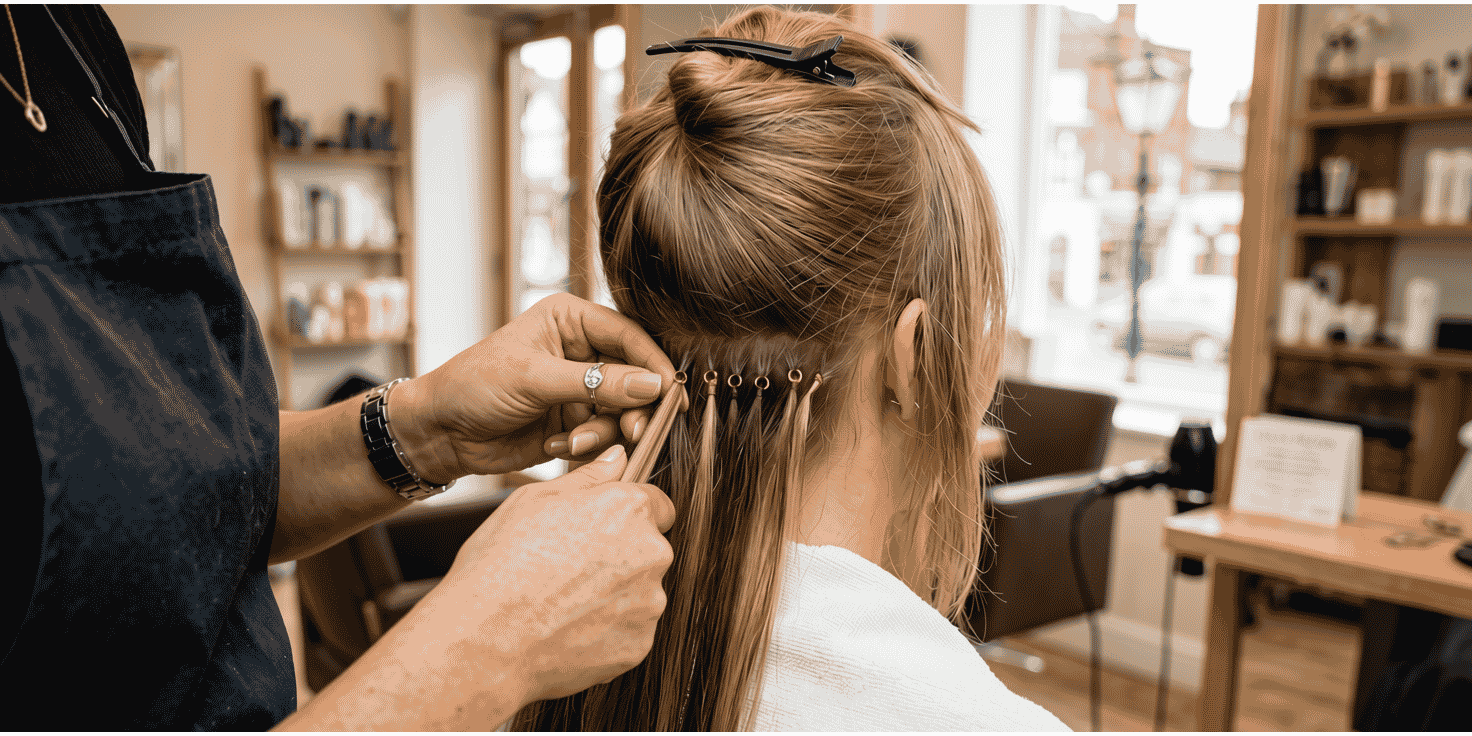
Hair extensions are one of the most effective ways to restore the appearance of volume and length during this window. Tape extensions and nano rings are particularly well-suited to finer hair because they distribute weight evenly and sit flat against the scalp without adding tension to already-shedding follicles.
To discuss what would work for your hair right now, visit our hair extensions in Finchley page or call us on 020 8129 4894 to arrange a free consultation.
Frequently Asked Questions
Does hair shed in autumn?
Yes – autumn is the peak shedding season for most people. Hair that entered a resting phase during the summer months sheds in September, October and November when that resting phase ends. It is a normal biological process and the hairs grow back. Most people see their hair return to normal thickness by January or February.
What is telogen effluvium?
Telogen effluvium is the name for increased hair shedding caused by a larger than usual number of follicles entering the resting (telogen) phase of the hair growth cycle at the same time. It can be triggered by seasonal changes, stress, illness, hormonal shifts or nutritional deficiencies. The seasonal version that peaks in autumn is temporary and self-resolving. Other causes may need investigation if shedding continues beyond three months.
What are the signs that my hair is thinning?
Signs of genuine thinning rather than seasonal shedding include a visibly wider parting, a noticeably smaller ponytail circumference over several months, more scalp visible at the crown or temples, and hair that does not recover its density after a shedding episode. Seasonal shedding resolves itself within two to three months. If your hair is consistently thinner each autumn than the last, it is worth speaking to a trichologist or your GP.
When does seasonal hair shedding stop?
Seasonal hair shedding typically slows down and stops within six to eight weeks of starting. For most people in the UK this means shedding peaks in October and returns to normal by November or December, with visible regrowth appearing by January or February. If shedding continues past eight weeks without slowing, an underlying cause such as iron deficiency, thyroid imbalance or prolonged stress may be contributing.